Description
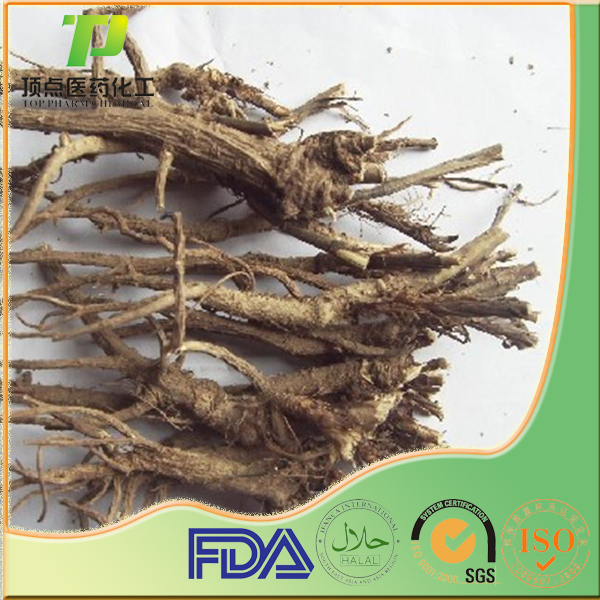
Bupleurum grows in China and is cultivated throughout the central and eastern parts of that country. Bupleurum is also found in other parts of Asia and in Europe.
Bupleurum is propagated from seed in spring or by root division in autumn and requires well-drained soil and plenty of sun. The root is unearthed in spring and autumn. Distribution mainly in Chinese provinces.
|
Analysis
|
Specification
|
Results
|
Test Method
|
|
Assay
|
10:1
|
10:1
|
|
|
Appearance
|
Brown
|
Brown
|
Visual
|
|
Loss on Drying
|
≤5.0%
|
3.33%
|
5g/105°C/2hrs
|
|
Ash
|
≤5.0%
|
2.02%
|
5g/525°C/2hrs
|
|
Heavy Metal
|
≤10 ppm
|
Complies
|
CP2010
|
|
As
|
≤2 ppm
|
Complies
|
CP2010(AAS)
|
|
Pb
|
≤2 ppm
|
Complies
|
CP2010(AAS)
|
|
Hg
|
≤0.5 ppm
|
Complies
|
CP2010(AAS)
|
|
Cd
|
≤0.5 ppm
|
Complies
|
CP2010(AAS)
|
|
Total Plate Count
|
≤1000cfu/g
|
Complies
|
CP2010
|
|
Yeast&Mold
|
≤100cfu/g
|
Complies
|
CP2010
|
|
E.Coil
|
Negative
|
Negative
|
CP2010
|
|
Salmonella
|
Negative
|
Negative
|
CP2010
|
Main Function
-Bupleurum extract can enhance macrophage cell activity.
-Bupleurum extract shows potent heart and blood vessel protective effects.
-Bupleurum extract has anti-inflammatory activity in a wide variety of animal models.
-Bupleurum is used in the treatment of chronic hepatitis, enlarged liver or spleen, chemical liver damage, liver stasis or liver congestion, depression, and irregular menstruation.
-Bupleurum is cited as an herb that increases protein synthesis in the liver, and reduces inflammation by inhibiting prostaglandin production.
Application
Used in the treatment of chronic hepatitis, enlarged liver or spleen, chemical liver damage, liver stasis or liver congestion, depression, and irregular menstruation.
Bupleurum is cited as an herb that increases protein synthesis in the liver, and reduces inflammation by inhibiting prostaglandin production.
|