Specification of rosemary oil
|
Product name:
|
Rosemary oil
|
|
Apperance:
|
colorless or faint yellow volatile oil
|
|
Aroma:
|
with the rosemary special cool refreshing scent , and sweet camphor aroma
|
|
Relative density:
|
0.894~0.912
|
|
Refractive index:
|
1.464~1.476
|
|
Specific rotation:
|
-5°~ +10°
|
|
Content:
|
ester≥1.5%borneol≥8.0%
|
Description of rosemary
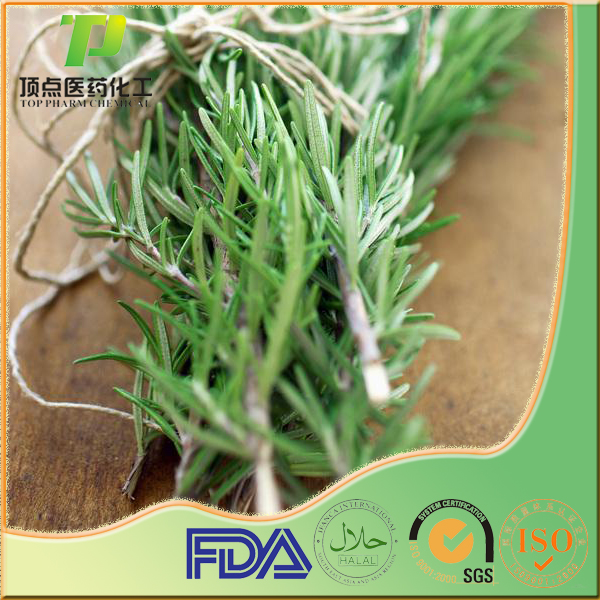
Rosemary is an evergreen shrub with numerous branches and ash-colored scaly bark with leathery, thick leaves, which are lustrous and dark green above, and white underneath.
Common Uses of rosemary oil
Rosemary Essential Oil is best used as a facial oil for extremely dry skin. It nourishes the scalp and keeps hair looking healthy and shiny, and many users claim that it promotes hair growth, though there is not any medical evidence to support this argument. It normalizes excessive oil secretions and improves most scalp problems, particularly dandruff and seborrhea. Rosemary Oil is also helpful in treating cellulite. It also balances intense emotions and controls mood swings. It assists in managing stress and overcoming stress-related disorders and nervous exhaustion.
Aromatic Scent of rosemary oil
Rosemary Essential Oil has a fresh, strong, woody, balsamic, herbal minty scent.
History of rosemary oil
Because it grows in proximity to the sea, it's name means Dew of the Sea. Its leaves were traditionally burned in hospitals to purify the air. Rosemary was used as incense by the ancient Romans and according to legend; Mary sheltered the baby Jesus under a rosemary bush.
Cautions of rosemary oil
Rosemary Essential Oil is generally non-toxic and non sensitizing. It is not suitable for people with epilepsy or high blood pressure. Avoid in pregnancy since it is an emmenagogue.
|